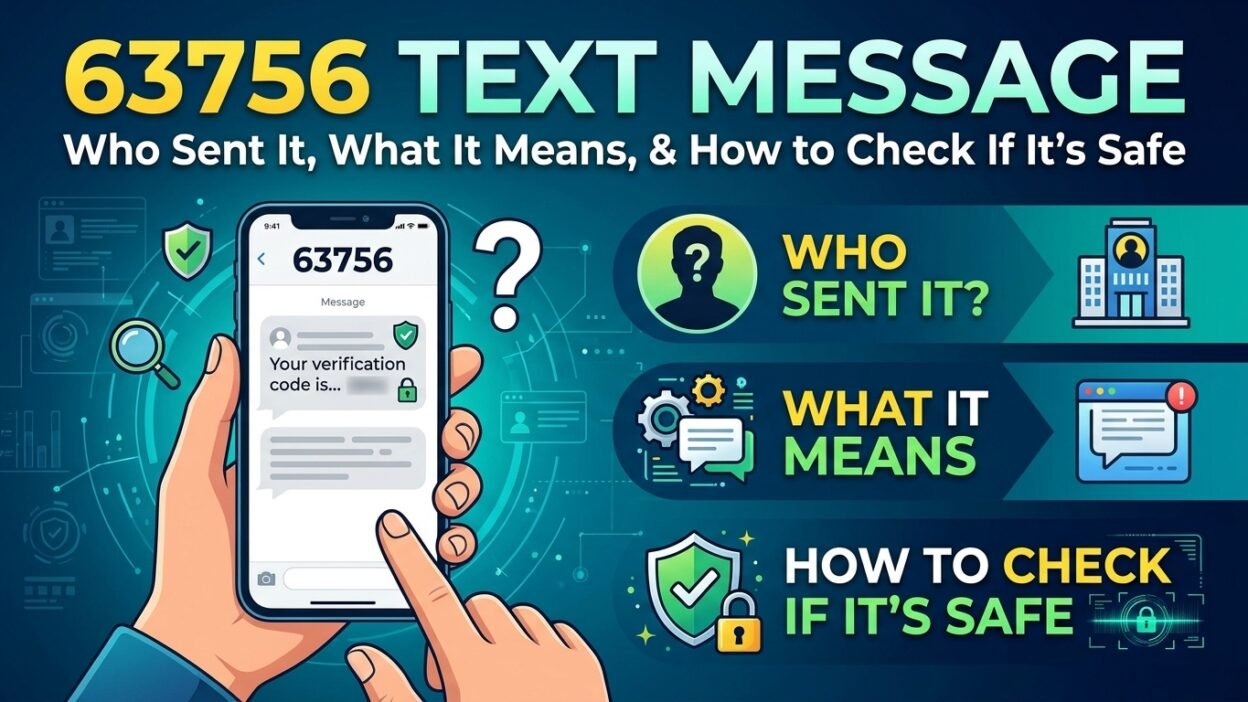
Receiving a message from an unfamiliar number can leave you wondering who contacted you and why. If you’ve received a 63756 text message, you may want to identify the sender, understand its purpose, and determine whether the message is legitimate.
Short numbers often appear when businesses, schools, online platforms, and automated messaging services communicate with customers. However, identifying a five-digit number isn’t always straightforward. The same number may have different uses depending on the country, mobile carrier, and messaging provider.
One important detail is that a publicly available search result associates 63756 with a Remind classroom enrollment code, rather than independently confirming it as the sender of an SMS. Therefore, it’s important not to confuse a code included inside a message with the number that sent it.
Hayward High School
This guide explains what is currently known about 63756, possible reasons you might encounter it, how to investigate an unexpected message, and what steps you should take to protect your personal information.
🔎 What Is the 63756 Text Message?
The 63756 text message keyword can refer to more than one thing, so understanding the surrounding information matters.
A five-digit number may serve as a messaging identifier, automated notification source, or service-related code. In the United States, organizations commonly use five- or six-digit short codes to communicate with customers. These messages can include account alerts, appointment reminders, verification codes, and promotional updates.
Campaign Verify+1
However, the available evidence does not establish 63756 as an officially verified business messaging short code.
There is another documented use worth understanding.
A school website lists @63756 as a Remind class enrollment code. Students can text that code to 81010 to join a class. In this example, 63756 is the class code, while 81010 is the number receiving the enrollment request.
Hayward High School+1
This distinction is important because seeing 63756 inside a message doesn’t necessarily mean the message originated from that number.
📱 Is 63756 a Legitimate Text Message Number?
It’s understandable to question an unfamiliar five-digit number. Nevertheless, a short number alone cannot establish whether a message is genuine.
Legitimate organizations use automated messaging systems for routine communication. For example, schools may send classroom updates, retailers may provide order notifications, and financial institutions may deliver transaction alerts.
At the same time, scammers can imitate familiar organizations or manipulate sender information.
Here are some details to consider:
Message characteristic
What it could indicate
School or classroom information
An educational notification
Verification code
An account authentication request
Order confirmation
A retail notification
Promotional offer
A marketing campaign
Unexpected payment request
A possible scam
Unknown website link
A reason to investigate
Importantly, none of these examples proves that 63756 belongs to a particular organization.
The safest approach is to examine the complete message and verify its claims independently.
🏫 Could 63756 Be Connected to Remind?
One documented connection involves Remind.
Remind is a communication platform used by teachers, students, parents, and schools. It allows educational communities to exchange announcements and classroom information.
A school resource specifically identifies @63756 as a band class enrollment code.
Here’s how that process works:
- A teacher provides a classroom code.
- A student opens the phone’s messaging application.
- The student enters @63756 as the message.
- The student sends it to 81010.
- Remind responds with instructions to complete enrollment.
This example demonstrates that 63756 can function as an educational enrollment code rather than a standalone sender number.
Hayward High School+1
How can you check whether this applies to your message?
Consider whether you or someone in your household recently joined a school, band, classroom, or educational group.
If so, contact the teacher or school administrator through an established communication channel. They can confirm whether the code belongs to their class.
You shouldn’t assume every message mentioning 63756 comes from Remind, though. The documented school example doesn’t establish ownership of every message containing those digits.
🤔 Why Did You Receive a Message From or Mentioning 63756?
There are several possible explanations for encountering this number.
The correct explanation depends on where the number appears and what the message says.
1. You recently joined a school communication group
If you entered a classroom code into your messaging application, you may receive confirmation messages and future announcements.
For example, a student might join a music class after receiving instructions from a teacher.
2. Someone entered your phone number incorrectly
Occasionally, a person may accidentally enter another person’s number while registering for an online service.
As a result, you might receive an unexpected confirmation or enrollment message.
If this happens, don’t follow unfamiliar links or provide personal information.
3. An automated messaging service contacted you
Businesses and organizations use automated systems to deliver information without requiring someone to send each message manually.
These notifications may relate to subscriptions, appointments, account activity, or customer support.
However, the number alone doesn’t identify which organization operates the service.
4. You received an unwanted promotional message
Marketing messages sometimes arrive from numbers that aren’t saved in your contacts.
A legitimate promotional campaign should identify the organization and provide an appropriate way to manage communication preferences.
Nevertheless, unexpected marketing messages deserve caution, particularly when they contain suspicious links.
5. Someone is attempting to impersonate an organization
Scammers sometimes imitate schools, banks, delivery companies, and popular online services.
Their messages may create urgency by claiming that an account needs attention or a payment requires immediate action.
Therefore, verify the organization before responding.
🔍 How to Identify the Real Sender of 63756
Finding the actual sender requires more than searching the number online.
Use these practical steps to investigate the message.
Step 1: Check the sender information
Open your messaging application and inspect the conversation details.
Look at the number displayed at the top of the conversation. Determine whether 63756 appears as the actual sender or simply inside the message.
This small detail can prevent confusion.
Step 2: Read the complete message
Look for an organization name, service description, or explanation of why the message arrived.
For instance, a classroom notification may mention a teacher or school. Similarly, an account alert may identify the service involved.
Step 3: Search the official short-code registry
If you’re using a US mobile network, visit the.
The registry provides a search facility for five- and six-digit messaging codes. You can investigate whether a code has a registered listing.
Short Code Registry+1
Remember that a registry search is only one verification step. It doesn’t establish that every message displaying a particular number is genuine.
Step 4: Contact the organization independently
If the message mentions a school, bank, retailer, or online account, visit its official website.
Use the contact information published there rather than calling a number included in an unexpected message.
Step 5: Ask your mobile carrier
Your wireless provider may help investigate suspicious messages and explain available blocking or reporting options.
This is particularly useful when you repeatedly receive unwanted notifications.
⚠️ Is the 63756 Text Message a Scam?
There isn’t enough verified information to label every message associated with 63756 as fraudulent or legitimate.
Instead, evaluate the message’s behavior.
Scam messages often use psychological pressure to make recipients act without checking the facts.
Watch for these warning signs:
- Urgent threats: The message claims your account will close immediately.
- Unexpected rewards: You supposedly won a prize you never entered to receive.
- Payment demands: The sender requests unusual payment methods.
- Suspicious links: The message directs you to an unfamiliar website.
- Personal information requests: Someone asks for passwords, banking details, or verification codes.
- Unfamiliar attachments: The message encourages you to download an unexpected file.
According to the Federal Trade Commission (FTC), unexpected messages requesting personal or financial information deserve particular caution. The agency recommends avoiding links and independently contacting the organization involved.
Consumer Advice+1
A familiar-looking sender name doesn’t guarantee safety either.
Scammers can imitate organizations, so the message’s content and requested actions matter more than its appearance.
🛡️ What Should You Do After Receiving an Unexpected Message?
Your response should depend on whether you recognize the sender and understand the message.
The following actions can help protect your information.
Situation
Recommended action
You recognize the school
Confirm the code with the teacher
You recognize the business
Check your account directly
You receive an unexpected OTP
Don’t share it
The message contains a suspicious link
Avoid opening it
You receive repeated unwanted texts
Block and report the sender
Someone requests payment
Verify independently
If you don’t recognize the message, there’s no reason to rush.
Take a moment to inspect it before deciding what to do.
Don’t share verification codes
One-time passwords (OTPs) protect accounts by confirming that someone has access to a registered phone number or another authentication method.
However, scammers may try to obtain these codes by pretending to represent a trusted company.
Never share a verification code with someone who contacts you unexpectedly.
Avoid unfamiliar links
A suspicious link may lead to a fake login page designed to collect passwords or financial information.
Instead, open the organization’s official application or type its known website address into your browser.
Block unwanted messages
Most modern smartphones provide options to block senders and filter unknown messages.
Use these features if the messages continue after you’ve confirmed they aren’t relevant.
Report suspicious activity
If you’re using a US mobile carrier, you can generally forward unwanted text messages to 7726 (SPAM).
This reporting service helps participating wireless providers investigate unwanted messaging activity. You can also submit complaints through the FTC Report Fraud website.
Consumer Advice+1
💬 What If You Receive Multiple Messages From 63756?
Receiving several messages can be confusing, especially when you don’t remember subscribing to anything.
However, repeated notifications don’t automatically indicate fraud.
There are several possible reasons:
Classroom announcements: Educational platforms may send multiple updates when teachers share assignments, reminders, or schedule changes.
Automated notifications: Some services send separate messages for different account activities.
Accidental enrollment: Someone may have entered your phone number incorrectly when joining a messaging group.
Unwanted messaging: A marketing service or suspicious sender may continue contacting you without your permission.
If the messages appear related to a school, contact its administration. If they mention a business, verify your subscription through the company’s official website.
For confirmed Remind messages, the platform provides an opt-out option. Its help center explains that users can text @STOP to 81010 to stop Remind texts, although certain urgent district announcements may still arrive.
Help Center
Don’t send random commands to an unidentified number. First establish which service you’re communicating with.
🌎 Do Short Codes Work the Same Way in Every Country?
No. Short-code systems differ between countries and mobile networks.
A five-digit number used by an American business may have no connection to a similarly formatted number in another country.
For example, the United States operates a short-code registry administered by CTIA. Its registry supports the registration and management of business messaging codes.
Campaign Verify+1
Other countries use their own telecommunications arrangements.
Consider these differences:
Location
Messaging considerations
United States
Five- and six-digit business short codes are commonly used
United Kingdom
Organizations use different short-code and sender identification arrangements
Pakistan
Businesses and mobile networks use local messaging identifiers and alphanumeric sender IDs
Other countries
Availability depends on local carrier and regulatory arrangements
If you’re outside the United States, don’t assume a US short-code directory can identify every message you receive.
Similarly, a number’s appearance doesn’t establish its country of origin.
For Pakistani mobile users, the major networks include Jazz, Zong, Ufone, and Telenor. Their messaging arrangements differ from the US short-code system.
Salesforce+1
Therefore, checking the country and carrier should be part of your investigation.
🚫 Common Mistakes People Make When Investigating 63756
People sometimes make incorrect assumptions when they receive messages from unfamiliar numbers.
Avoiding these mistakes can save time and protect your accounts.
Mistake 1: Assuming every five-digit number is a scam
Businesses and educational services legitimately use short codes. Therefore, the number’s length isn’t enough to establish whether a message is dangerous.
Mistake 2: Assuming every message is legitimate
A professional-looking message doesn’t guarantee that its sender is trustworthy.
Always verify unexpected requests for money or personal information.
Mistake 3: Confusing a class code with a sender number
The Remind example demonstrates why this matters. The school uses @63756 as a class code and 81010 as the destination for enrollment messages.
These two numbers have different purposes.
Hayward High School+1
Mistake 4: Clicking links before checking them
A message may contain a link that looks similar to an official website.
Instead, navigate to the organization’s website independently.
Mistake 5: Sharing an OTP with someone claiming to be customer support
Legitimate account verification should not require you to disclose a private authentication code to an unexpected caller or texter.
Mistake 6: Paying websites that promise guaranteed sender identification
Be careful with websites claiming they can reveal private subscriber information from any short code.
Use official registries, your carrier, and the organization involved instead.
📲 Can You Reply to or Block a 63756 Message?
Whether you should reply depends on the message’s origin.
If you’ve confirmed that a message belongs to a legitimate service, follow that service’s official communication instructions.
For example, Remind has its own documented enrollment and opt-out procedures.
However, if you don’t recognize the sender, avoid replying immediately.
Even a response such as “Who is this?” may confirm that your phone number is active.
Here are some sensible options:
- Recognized educational service: Contact the school or use the official Remind instructions.
- Recognized business: Check its communication preferences.
- Unknown promotional sender: Avoid engaging and consider blocking it.
- Suspicious message: Forward it to your carrier’s spam-reporting service where supported.
- Repeated unwanted messages: Use your phone’s blocking and filtering features.
On an iPhone, open the conversation and use its contact or sender information to access blocking options.
On Android, open the conversation menu and look for the block or report spam option. The exact wording may differ between manufacturers.
Remember that blocking a sender prevents future messages from that particular identifier, but it doesn’t necessarily stop other numbers associated with the same campaign.
🔐 How to Protect Your Phone Number From Future Text Scams
Protecting your phone number requires a few consistent habits.
Although no method can eliminate every unwanted message, these practices reduce common risks.
- Avoid entering your phone number on unfamiliar websites.
- Check privacy policies before subscribing to promotional services.
- Use unique passwords for important online accounts.
- Enable multifactor authentication where available.
- Never share account verification codes.
- Keep your phone’s operating system updated.
- Review unexpected account alerts through official applications.
- Report suspicious messages instead of engaging with them.
Furthermore, be careful about messages involving package deliveries, unpaid bills, account suspensions, and unexpected prizes.
These subjects frequently appear in impersonation attempts because they encourage people to act quickly.
The FTC also recommends contacting businesses through independently verified contact details rather than using information supplied in suspicious messages.
Consumer Advice+1
A few seconds of verification can prevent a much bigger problem.
🧾 What Information Can Help Identify the Message?
If you still cannot identify the sender, the original message contains useful clues.
Before contacting your carrier or the relevant organization, collect the following information:
Information
Why it matters
Displayed sender number
Helps distinguish the sender from text inside the message
Complete message
Provides context about the communication
Date and time
Helps identify when it arrived
Website link
May reveal an impersonation attempt
Your recent activity
Helps establish whether you requested the message
Country and carrier
Helps determine which messaging system applies
You don’t need to share private information publicly to investigate an unknown message.
In particular, remove verification codes, passwords, account numbers, and personal identifiers before sharing screenshots with anyone.
If you contact customer support, provide only the information needed to investigate the issue.
❓ Frequently Asked Questions About 63756 Text Messages
1. What is the 63756 text message?
The number appears in a documented school resource as a Remind classroom enrollment code, written as @63756. Students send that code to 81010 to join a class. Its use as a standalone SMS sender hasn’t been independently established.
Hayward High School
2. Who owns the number 63756?
There isn’t sufficient verified information to identify a specific company or individual as the owner of 63756. If you’re investigating a US business short code, check the official CTIA registry and confirm the result with the organization.
3. Is 63756 a scam or a legitimate number?
The number alone doesn’t establish whether a message is legitimate. Some uses of 63756 are documented in educational enrollment instructions. However, an unexpected message still requires independent verification.
4. Is 63756 connected to Remind?
A school website documents @63756 as a Remind class code for its band program. The code is sent to 81010 to join the classroom communication group. This doesn’t establish that 63756 is Remind’s general sender number.
Hayward High School+1
5. Should I reply to an unknown 63756 message?
Don’t reply until you’ve established which service sent it. If the message appears suspicious, avoid links and attachments. You can also block the sender and report the message through your mobile carrier.
6. How can I check whether 63756 is an official short code?
If you’re investigating a US short code, visit the official US Short Code Registry. Search for the number and independently verify any organization associated with the result.
Short Code Registry
7. How do I report a suspicious text message?
In the United States, forward the suspicious message to 7726 (SPAM), where supported by your carrier. You can also report suspected fraud through the FTC’s official website.
Consumer Advice+1
8. Can I block messages from 63756?
If 63756 appears as the sender, you can generally use your phone’s blocking or spam-reporting features. However, if it appears only inside a message as a classroom code, blocking it may not address the actual sender.
📌 Final Verdict: What Does the 63756 Text Message Mean?
The 63756 text message doesn’t have a conclusively verified, universal sender identity based on the available evidence.
One documented use connects @63756 with a Remind classroom enrollment code sent to 81010. However, that example doesn’t prove that 63756 itself is a registered messaging sender or that every message mentioning it comes from an educational service.
Therefore, examine the complete message, distinguish the sender number from any code inside the text, and verify the organization independently.
If the message requests personal information, payment, or an urgent account action, take extra care. Avoid suspicious links and report unwanted messages through your carrier.
Most importantly, don’t panic when an unfamiliar number appears. A careful verification process is more reliable than guessing based on five digits alone.