
If you received a 61746 text message, you may be wondering who sent it, why it appeared on your phone, and whether you should trust it. Short-code messages can come from businesses, online services, automated notification systems, or organizations that communicate with customers through SMS.
However, identifying a text message by its number alone can be difficult. A five-digit number such as 61746 may look official, but the number itself doesn’t confirm the sender’s identity or prove that a message is legitimate.
The most useful clues are the message’s wording, the service it mentions, whether you recently requested a verification code, and whether it asks you to click a link or provide personal information.
This guide explains how to investigate a 61746 text message, recognize possible warning signs, and decide what to do next. You’ll also learn how to verify a message without exposing your passwords, financial details, or other sensitive information.
🔎 What Does 61746 Mean in a Text Message?
The number 61746 is a five-digit SMS short code associated with Walmart text alerts, including order updates and pickup or service notifications in the United States. Short-code directories identify it as a Walmart-related messaging number.
A short code is a number that organizations use to send automated text messages to customers. These messages may provide delivery information, account notifications, promotional offers, or other service updates.
For example, a customer who orders household supplies online might receive a message about a package’s shipping status. Someone who signs up for store notifications might also receive updates through an SMS messaging service.
However, the number alone cannot establish that a particular message genuinely came from Walmart. Public scam reports have also described suspicious delivery texts associated with 61746, including messages containing questionable tracking links.
Here’s the important distinction:
- Possible legitimate use: A Walmart order update or pickup notification you were expecting.
- Possible unwanted use: An unsolicited promotional message or a notification sent to the wrong person.
- Possible security risk: A deceptive text that imitates a retailer to encourage you to open a link or disclose private information.
Therefore, check the message’s content and your recent shopping activity before deciding whether to trust it.
🛒 Why Did You Receive a Message From 61746?
Several circumstances could explain why this number appeared in your inbox. The wording of the message and your recent activities can help narrow down the possibilities.
1. A Walmart delivery notification
If you’ve recently placed an order with Walmart, the text might relate to shipping progress, an estimated arrival date, or a delivery update.
For instance, a message might say that a package is on its way. If you recently purchased something, that information may match a legitimate transaction.
Nevertheless, scammers can imitate delivery notifications. Verify the order independently through Walmart’s official website or app instead of relying on a link in the message.
2. A pickup or service alert
Retailers may use automated messages to tell customers when an order is ready, when its status changes, or when additional action is needed.
If you recently arranged a store pickup, compare the message with your actual order details. A matching order number and expected pickup information can provide useful clues, although they aren’t conclusive proof of authenticity.
3. A notification you didn’t expect
Sometimes, a phone number receives messages because another person entered it incorrectly or previously used it for a retail account.
In that situation, the message might refer to an unfamiliar order or a different customer’s activity. You don’t need to open its links or provide personal details to investigate.
4. An unsolicited or deceptive text
A message may use the name of a familiar retailer to make an unexpected request appear trustworthy.
For example, it might claim that your package cannot be delivered until you pay a small fee. Another version might promise a refund if you provide account information.
These messages deserve caution, especially when they create urgency or request sensitive information.
📋 How to Identify a 61746 Text Message
Use the following table to assess the message before responding.
Message type
What to look for
Recommended action
Order update
Matches a recent purchase
Check the order in the official app
Pickup notification
Matches a pickup you arranged
Verify the pickup status independently
Promotional offer
Relates to a subscription you recognize
Check the sender and subscription details
Unknown order
Mentions a purchase you don’t recognize
Check your accounts directly
Payment request
Demands an unexpected delivery fee
Don’t pay through the message link
Account verification
Contains a code you didn’t request
Don’t share the code; review account security
Suspicious link
Uses unusual spelling or an unfamiliar domain
Avoid opening it
Remember that legitimate-looking wording doesn’t guarantee safety. Likewise, an unexpected message isn’t automatically fraudulent. The goal is to verify the claim through a trusted channel.
🛡️ Is 61746 a Scam or a Legitimate Number?
The most accurate answer is that 61746 has been associated with Walmart alerts, but you should assess each message individually.
A legitimate business can use a short code for customer communications. However, a known sender number doesn’t guarantee that every message you receive is safe.
Third-party lookup websites provide useful background information, but their listings and user reports may be incomplete or outdated. In addition, scammers can imitate familiar businesses and exploit people’s trust in delivery notifications.
A practical assessment involves three checks:
- Context: Did you recently order something, arrange a pickup, or sign up for alerts?
- Content: Does the message provide plausible details without demanding unnecessary sensitive information?
- Verification: Can you confirm the same information by opening the retailer’s official app or website yourself?
If all three checks make sense, the message may be legitimate. However, you should still avoid sharing passwords, payment details, or verification codes through an unsolicited text.
If the message doesn’t match anything you’ve done, you can safely ignore it while checking your accounts independently.
🔗 How to Check a Link Sent From 61746
Unexpected delivery links deserve particular attention because phishing messages often imitate shipping notifications.
A suspicious text might include a shortened web address, a misspelled company name, or a page asking for payment information. However, a link’s appearance alone cannot establish whether it is malicious.
Follow these steps to investigate safely.
- Don’t open the link immediately. First, read the message and identify what it claims happened.
- Open Walmart independently. Type the official website address into your browser or use the app you already have installed.
- Review your order history. Check whether the order, delivery estimate, or pickup notification matches the text.
- Examine any requested payment. Be cautious if the message demands an unexpected fee to release a package.
- Contact customer support through official channels. Ask whether the notification matches a real order or service.
For example, suppose you receive a message claiming that your package is delayed and needs a small redelivery payment. Rather than clicking the provided link, open your account directly and check the shipping status.
If the official account shows no such problem, treat the message as suspicious until you can verify it.
Important: Don’t assume a link is safe simply because it contains a recognizable brand name. Scammers can create addresses that resemble legitimate websites.
📱 What Should You Do After Receiving 61746?
Your next step depends on whether the message matches your activities and whether you’ve already interacted with it.
If the message matches your order
Check your order status through the official retailer’s app or website. Keep the message if it contains useful delivery information.
If you don’t recognize the message
Avoid clicking links or replying with personal details. Verify the claim independently, then block or report the message if appropriate.
If the message appears fraudulent
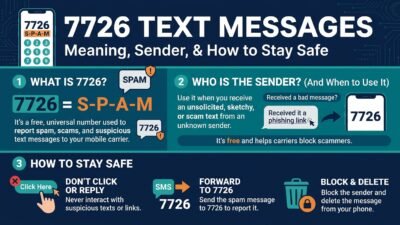
Report it as spam using your messaging app’s reporting feature. In the United States, you can also forward suspicious texts to 7726 (SPAM), where supported by your carrier.
If you shared sensitive information
Change any exposed password, contact your bank if you disclosed financial information, and review your account for unfamiliar activity.
If you believe someone has accessed your account, use the retailer’s official security and account-recovery procedures. Acting quickly can reduce the risk of further misuse.
🚩 Warning Signs That a 61746 Message May Be Unsafe
Not every unwanted text is a scam, but certain patterns deserve extra scrutiny.
Unexpected payment requests
Be suspicious when a message claims that you must pay a small fee before receiving a package. The amount may seem harmless, yet a fake payment page could collect your card details.
Urgent threats or deadlines
Messages that threaten immediate account suspension, package cancellation, or financial penalties may be trying to pressure you into acting without checking the facts.
Requests for passwords or verification codes
A legitimate service may send a one-time code when you request one. However, you shouldn’t disclose that code to someone who contacts you unexpectedly.
Unfamiliar website addresses
Look for misspelled brand names, strange domain endings, and shortened links that hide the destination. When in doubt, use the official app rather than the supplied URL.
Personal information requests
Be wary of unsolicited messages asking for your Social Security number, full payment card details, account passwords, or other sensitive information.
One warning sign doesn’t prove that a text is fraudulent. Nevertheless, several warning signs together provide a strong reason to stop and verify the message.
💬 Should You Reply STOP or HELP to 61746?
Some legitimate messaging programs support standard commands such as STOP to unsubscribe and HELP to request information. However, you shouldn’t assume that an unfamiliar message is trustworthy simply because it offers these options.
A short-code directory lists 61746 as a registered code and describes STOP and HELP as possible commands.
Who Texted Me From 61746?
Here’s how to approach these replies:
- STOP: Consider using it when you’ve verified the sender and want to unsubscribe from unwanted legitimate messages.
- HELP: Use it only when you have a reasonable basis for trusting the messaging program and want its instructions.
- No response: If the message appears fraudulent or unrelated to you, don’t engage. Block and report it instead.
Replying can confirm that your phone number is active, so avoid engaging with suspicious senders unnecessarily.
If you previously subscribed to a legitimate retailer’s alerts, you can also review your notification preferences through its official account settings.
🔐 What If You Received a Verification Code From 61746?
A verification code is a temporary number or sequence used to confirm access to an account or complete a security step. However, the available references for 61746 primarily associate it with Walmart notifications, so you shouldn’t automatically interpret every message from this code as an account verification request.
If a text contains a security code you didn’t request, several explanations are possible:
- Someone entered your phone number by mistake.
- Another person attempted to sign in using your number.
- Someone is trying to access an account connected to your phone.
- The message is unsolicited or deceptive.
Receiving an unexpected code doesn’t necessarily mean that someone has accessed your account successfully.
Take these precautions:
- Don’t share the code with anyone, even someone claiming to be customer support.
- Open the relevant account through its official app or website.
- Review recent login activity and security notifications if available.
- Change your password if you notice suspicious activity or believe someone knows it.
- Enable multifactor authentication where available.
If the message doesn’t identify a service you recognize, don’t guess which account it concerns. Focus on the actual message content and verify any claims independently.
🌎 Does 61746 Work the Same Way on Every Phone or Network?
Short-code messaging can vary by country, carrier, and messaging provider. Therefore, a number’s use in the United States doesn’t automatically establish its purpose in another country.
The available directories associate 61746 with Walmart alerts in the US.
If you receive a similar message while traveling or using an international SIM, consider the country and service involved before drawing conclusions.
Your phone model can also affect how you manage the message, although it doesn’t independently verify the sender.
Device or service
What you can do
iPhone
Use the Messages app to report junk or block the sender when those options are available.
Android
Use Google Messages or your messaging app’s spam-reporting and blocking options.
Mobile carrier
Ask whether it offers spam filtering or short-code message reporting.
Retailer account
Check order details and notification preferences directly.
If you’re outside the United States, local reporting procedures may differ. Use your carrier’s official support channel to learn which options apply to your network.
🧠 Common Mistakes to Avoid When Checking 61746
A careful approach can help you avoid unnecessary worry and prevent security problems.
Mistake 1: Trusting a number because it appears in a lookup directory.
A directory can help identify a reported use, but it cannot verify the contents of every message. Always check the specific notification.
Mistake 2: Assuming every unexpected text is a scam.
A wrong number, an old subscription, or an unfamiliar order notification can have an innocent explanation. Verify the information before deciding what happened.
Mistake 3: Clicking a tracking link to check whether it works.
You don’t need to open a suspicious link to investigate it. Check your order through the retailer’s official website or app instead.
Mistake 4: Sharing a verification code with someone who asks for it.
Keep one-time codes private. A person who obtains your code may be able to complete a sign-in or another security-sensitive action.
Mistake 5: Replying to every unwanted message.
Engaging with an untrusted sender may create additional risks. When a text appears fraudulent, blocking and reporting it is usually safer than responding.
The best approach is simple: verify the claim independently, protect your personal information, and take action based on evidence rather than assumptions.
❓ Frequently Asked Questions About 61746 Text Messages
1. Who sends text messages from 61746?
The number 61746 is associated with Walmart text alerts, including shipping, pickup, and service notifications. However, the number alone cannot confirm that a specific message is genuinely from Walmart. Check the message against your actual orders.
2. Is 61746 a legitimate Walmart short code?
Public short-code directories identify 61746 as a Walmart-related messaging code. Nevertheless, you should verify unexpected texts independently because a familiar number or brand name doesn’t guarantee that every message is legitimate.
3. Why did I receive a 61746 text when I didn’t order anything?
You might have received a message because someone entered your number incorrectly, a previous account remains connected to it, or the message is unsolicited. Check your retail accounts directly and avoid opening unfamiliar links.
4. Is a 61746 delivery text a scam?
Not necessarily. The number is associated with legitimate Walmart alerts, but suspicious delivery messages have also been reported. Be especially cautious if a text demands an unexpected payment, requests sensitive information, or directs you to an unfamiliar website.
5. Can I block messages from 61746?
Yes. Most smartphones provide options to block a sender or report unwanted messages, although the exact steps depend on your messaging app and carrier. If you want to keep legitimate order notifications, check your preferences before blocking the number.
6. Should I reply STOP to 61746?
You can consider replying STOP if you’ve verified that the message comes from a legitimate messaging program and you want to unsubscribe. If the message appears fraudulent, avoid engaging and use your phone’s spam-reporting tools instead.
7. What should I do if I clicked a link in a 61746 message?
If you only opened the page, close it and avoid entering information or downloading anything. If you entered a password, change it through the official service. If you supplied payment details, contact your bank or card issuer promptly and monitor your account.
8. How can I confirm whether a 61746 message is real?
Open the relevant retailer’s official app or type its known website address into your browser. Compare the message with your order history and contact official customer support if necessary. Don’t rely solely on the sender number or a link inside the text.
✅ Final Thoughts
A 61746 text message is commonly associated with Walmart order, pickup, and service alerts in the United States. However, you shouldn’t assume that every message from this number is authentic. Check whether the notification matches your recent activities, avoid suspicious links, and never share passwords or verification codes with an unverified sender. If the message seems unusual, confirm its claims through the retailer’s official website or app before taking action. A few simple checks can help you distinguish a useful notification from a potential scam while keeping your personal information safe.