
Receiving a text from 24273 can leave you wondering who sent it, why it appeared on your phone, and whether you should respond. Short codes and unfamiliar sender IDs often belong to automated messaging systems, but the number alone doesn’t reveal the sender’s identity.
The 24273 text message could be connected to a business notification, an account verification process, a promotional campaign, or another messaging service. However, without a verified source identifying this specific short code, it’s not possible to confirm which organization uses it or what a particular message means.
The safest approach is to examine the message’s wording, consider whether you recently requested a code or interacted with a company, and verify any claims independently. A familiar-looking name or a professional message doesn’t automatically prove authenticity.
This guide explains what a message from 24273 might indicate, how to investigate its origin, which warning signs deserve attention, and what to do if the text appears suspicious. You’ll also learn how to protect your personal information without accidentally ignoring a legitimate notification.
🔎 What Is the 24273 Text Message?
A text from 24273 is a message associated with a five-digit sender ID rather than a conventional ten-digit phone number. In some countries, businesses and messaging providers use these abbreviated numbers to send automated SMS communications.
These numbers are commonly called SMS short codes. Depending on the country and service, organizations may use them for verification codes, service alerts, marketing messages, account notifications, and other automated communications.
However, there is an important distinction between a general short-code explanation and a confirmed identification of one particular number.
Detail
What you should know
Sender ID
24273, a five-digit numeric identifier
Possible message type
Verification, notification, promotional, or service-related SMS
Confirmed organization
Not established from the number alone
Legitimacy
Depends on the message and independently verified sender
Recommended response
Check the context before clicking, replying, or sharing information
A short code can help route messages through a messaging system, but it doesn’t necessarily tell you which company initiated the communication.
Furthermore, short-code assignments and usage can vary by country and service provider. Therefore, an identification that applies in one region may not apply elsewhere.
The key point: Treat 24273 as an unidentified sender until you can verify its connection to a legitimate organization.
🏦 Who Sends Messages From 24273?
Research into public short-code directories identifies 24273 with JPMorgan Chase Bank, commonly known as Chase, in the United States. The number also spells “CHASE” on a standard telephone keypad. Public listings associate it with Chase text banking and QuickPay-related notifications.
Chase is therefore a strong lead if you’re investigating a message from this number. Still, that identification doesn’t prove every message displaying 24273 is genuine, nor does it establish the exact purpose of the text you received.
Here are some possible explanations.
1. Chase Mobile app link
Chase provides a text-based option for customers who want a link to its mobile banking app. Its published instructions say to text MOBILE to 24273 to request the link.
If you initiated that request, a follow-up message containing an app link would fit the expected context. If you never requested it, don’t open the link automatically. Instead, visit the official Chase website or your device’s app store independently.
2. Banking and account notifications
Some messages associated with Chase may concern account activity, payments, transfers, or banking services. Public short-code directories connect 24273 with Chase’s QuickPay messaging program and related alerts.
For example, you might receive a notification about a transaction or a banking activity alert. However, the exact notifications available depend on your account, settings, and the service involved.
If a text mentions a transaction you don’t recognize, check your account directly rather than replying to the message.
3. A message triggered by a phone number or account interaction
You might receive an unexpected text if someone entered your number by mistake, your number was previously associated with another customer, or an account interaction triggered a notification.
These are possibilities, not confirmed explanations for your particular message. If the text refers to a Chase account you don’t have, don’t click its links or provide personal information to clarify the situation.
4. A fraudulent message pretending to be Chase
Scammers sometimes impersonate banks to persuade people to reveal passwords, verification codes, or financial information. They may also use alarming claims about suspicious transfers or locked accounts to pressure recipients into acting quickly.
Even when a short code has a legitimate association with a bank, you should verify the message itself before trusting its instructions. A genuine-looking sender ID isn’t enough to establish that a link, payment request, or caller is safe.
📩 Common Types of 24273 Messages and What They May Mean
The wording of your message can help you narrow down its likely purpose. The examples below are illustrative, not verified copies of actual messages from Chase.
Message context
Possible explanation
Recommended action
A link to download a banking app
An app-link request
Check whether you requested it
A payment or transfer notification
Banking activity alert
Review your account independently
A message about an unfamiliar transaction
Potential account activity or impersonation
Open the official banking app
A request for a verification code
Authentication-related communication
Never disclose the code to another person
An unexpected promotional or service message
A notification or an incorrectly directed text
Verify the sender and context
A threat that your account will close unless you click
Potential phishing attempt
Don’t click; contact the bank independently
Remember that the text’s content matters more than a quick assumption based on its number. A legitimate alert may still require investigation, while an unexpected message isn’t automatically proof that your account has been compromised.
🛡️ How to Check Whether a 24273 Text Is Legitimate
You don’t need to click a link to investigate an unfamiliar banking message. Follow these steps to check it more safely.
Step 1: Read the complete message
Check what the sender claims, whether it mentions a transaction or service you recognize, and whether it asks you to take urgent action. Don’t follow its links while investigating.
Step 2: Open your banking app independently
If you use Chase, open the official Chase Mobile app already installed on your device, or type the bank’s official web address yourself. Check account activity and available alerts.
Step 3: Compare the details
Look for a matching transaction, app-link request, or account notification. If the message describes activity that doesn’t appear in your account, contact the bank using a trusted contact method.
Step 4: Contact the bank directly
Use the telephone number printed on your bank card or listed on its official website. Don’t call a number supplied only in a suspicious text.
Step 5: Protect your account
Never share your password, PIN, or one-time verification code with someone who contacts you unexpectedly. If you suspect unauthorized activity, notify the bank promptly.
These steps help you distinguish an expected notification from a suspicious request without relying solely on the sender ID.
⚠️ Warning Signs That a 24273 Text Could Be a Scam
Banking scams often rely on urgency, confusion, and fear. According to the Federal Trade Commission, scammers may impersonate banks and send fake fraud alerts to persuade people to respond or reveal sensitive information.
Watch for these warning signs:
- Unexpected requests for passwords: A text asks you to provide your banking password, PIN, or other sensitive login information.
- Urgent threats: The message claims your account will be permanently closed unless you act immediately.
- Suspicious links: The URL leads to an unfamiliar website or a page requesting personal or financial details.
- Unrecognized transactions: The message describes a transfer or purchase that you cannot find in your account.
- Pressure to move money: Someone tells you to transfer funds to another account to protect them from fraud.
- Requests to share verification codes: A caller or message asks you to disclose a one-time security code.
One warning sign doesn’t necessarily prove fraud, but it should prompt you to verify the situation independently.
📱 What Should You Do If You Receive an Unexpected Message?
Your next step depends on the message’s content and whether you have a relationship with Chase.
If you recognize the banking activity
Open your banking app directly and compare the details. If everything matches, follow the instructions available through your verified account.
If you don’t have a Chase account
Don’t follow links or share information. The text could have reached you by mistake, or it could be an impersonation attempt. Report it if it appears suspicious.
If you suspect fraud
Contact your bank using a trusted number, review recent activity, and report any unauthorized transactions promptly.
If you’ve shared sensitive information
Contact your bank immediately. Change compromised passwords through the official website, and explain whether you shared a verification code or approved a transaction.
Should You Reply STOP or HELP?
Don’t automatically reply to an unexpected message just because it appears to come from a familiar short code.
Some legitimate messaging programs support STOP to unsubscribe and HELP to request assistance. However, the available commands depend on the specific messaging program.
For 24273, first confirm that the message belongs to the Chase service you intended to use. If you’re unsure, contact Chase through its official channels rather than replying to a suspicious text.
Chase’s published messaging terms list different short codes for different services, including separate codes for certain account-service messages and one-time authentication codes. Therefore, don’t assume that every Chase text program uses the same instructions.
🌐 Why Might You Receive a 24273 Text When You Didn’t Request One?
Unexpected messages can have several explanations. The following possibilities are worth considering, although none can be confirmed from the sender number alone.
Someone entered the wrong phone number. A customer may have mistyped a digit when requesting an app link or setting up a service.
Your number was previously used by someone else. If a phone number changes owners, the new owner may occasionally receive messages intended for the previous subscriber.
Someone initiated an account-related action. A person might have entered your number while interacting with a banking service. This doesn’t automatically mean they accessed your account.
The message is an impersonation attempt. Scammers may send unexpected texts to encourage recipients to click links, call fake support numbers, or disclose confidential information.
If the message mentions a real account you own, check that account directly. If it doesn’t relate to you, avoid engaging with it until you’ve established its purpose.
💬 How to Report or Block a Suspicious 24273 Message
If you believe the text is fraudulent or unwanted, you can report it rather than engaging with the sender.
- Use your phone’s built-in Report Junk or Report Spam option if available.
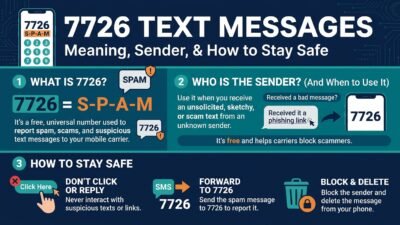
- In the United States, forward suspicious texts to 7726 (SPAM) to report them to your mobile carrier.
- If the message impersonates Chase, contact the bank through its official website or the number on your card.
- Report suspected fraud to the appropriate consumer-protection authority.
- After reporting the message, delete it and block the sender if appropriate.
The FTC recommends reporting unwanted texts and avoiding links in unexpected messages.
If you live outside the United States, reporting procedures and short-code rules may differ. Check your local mobile carrier’s guidance before using a US-specific reporting service.
🧠 Common Misunderstandings About the 24273 Short Code
A few misconceptions can make it harder to assess an unfamiliar message accurately.
Misunderstanding
What you should know
Every text from 24273 is safe
A legitimate short-code association doesn’t guarantee that every message is genuine
Receiving the message means my bank account was hacked
A message alone doesn’t establish unauthorized account access
I must click the link to check my account
You can access your account through the official app or website
An unfamiliar text always means fraud
Mistyped numbers and unexpected notifications can have other explanations
Replying to every message is the best way to identify the sender
Responding to suspicious messages can expose you to further scams
The best way to resolve uncertainty is to verify the claim through a trusted channel. This approach protects your information while helping you avoid unnecessary worry.
❓ Frequently Asked Questions
1. What does 24273 mean in a text message?
In the United States, 24273 is associated with Chase banking services and mobile-app link requests. Public directories also connect it with Chase QuickPay-related messaging. The specific meaning of your text depends on its content and context.
2. Is 24273 a legitimate Chase number?
Yes, public short-code directories and Chase’s own website support the association between 24273 and Chase’s mobile-app service. However, you should still verify unexpected messages independently before clicking links or sharing information.
3. Why did I receive a text from 24273 if I don’t use Chase?
Possible explanations include a mistyped phone number, a number previously associated with another person, or an impersonation attempt. The text alone cannot establish which explanation applies. Avoid clicking links and report suspicious content.
4. Can a 24273 text be a scam?
A message claiming to come from a legitimate organization can still be misleading or fraudulent. Be particularly cautious if it requests passwords, verification codes, payments, or urgent action through an unfamiliar link. Verify any banking claims independently.
5. Should I click a link from 24273?
Only consider a link after confirming that you requested the message and that it relates to the intended service. A safer alternative is to open the official Chase website or app yourself. Don’t use a link in an unexpected message to investigate a possible account problem.
6. What if I receive a verification code I didn’t request?
Don’t share the code with anyone. An unexpected code may mean someone entered your number or attempted an account action, but it doesn’t prove that they accessed your account. Check your account through the official service and contact the provider if necessary.
7. How can I stop unwanted messages from 24273?
First, determine which messaging program sent the text. If it’s a legitimate Chase service you enrolled in, follow the verified program’s opt-out instructions. If the text appears fraudulent, report it as spam and block it where appropriate rather than engaging with the sender.
8. Does receiving a message from 24273 mean my personal information has been stolen?
No. Receiving a text doesn’t, by itself, prove that your personal information has been compromised. However, if the message describes an unfamiliar transaction or you shared sensitive details, review your account and contact the relevant financial institution promptly.
✅ Final Thoughts
The 24273 text message is associated with Chase banking services in the United States, including requests for mobile-app links and certain banking notifications. Nevertheless, the sender ID alone cannot establish whether an individual message is authentic or explain why you received it.
Read the message carefully, check relevant account activity through an independently accessed official app or website, and contact the bank directly if anything seems unusual. Most importantly, never share passwords, PINs, or one-time verification codes with someone who contacts you unexpectedly.
A few minutes of independent verification can help you distinguish a routine notification from a potentially harmful attempt to obtain your information.