
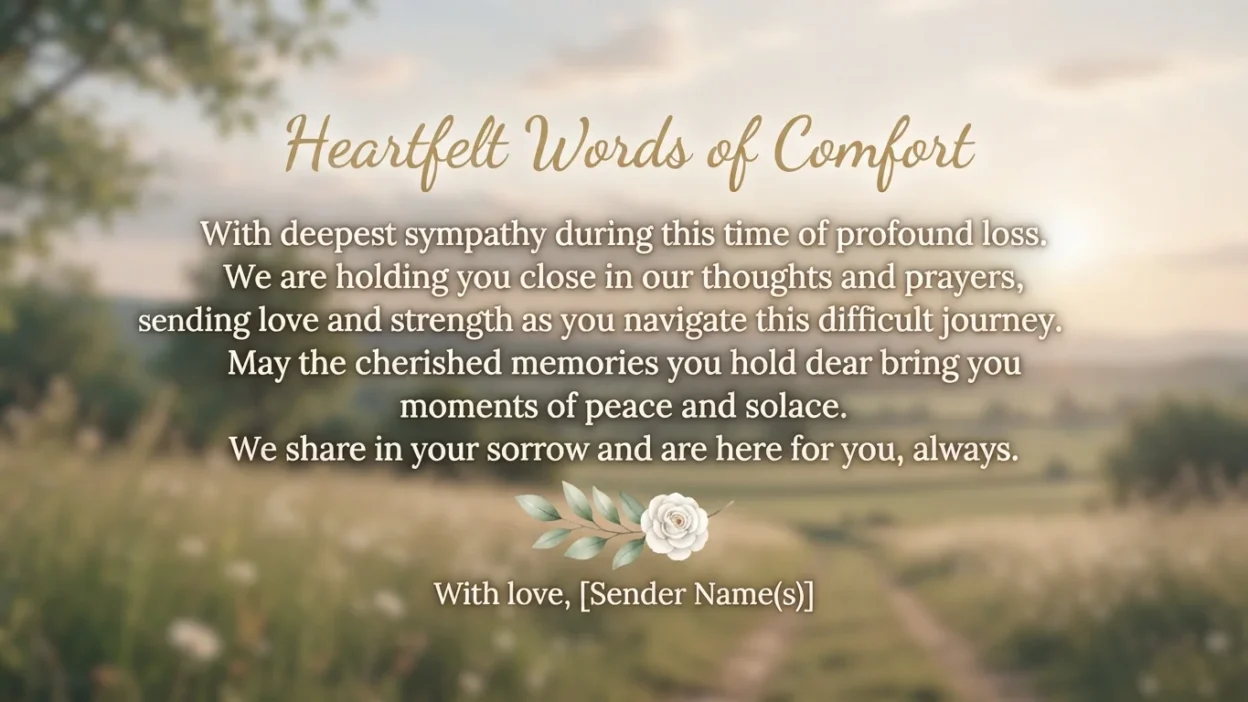
Finding the right condolence message can feel surprisingly difficult. When someone loses a loved one, ordinary words often seem too small for the moment. You may want to show care, but you might worry about sounding formal, saying too much, or accidentally making the grieving person feel worse.
The good news is that you don’t need perfect words. A sincere condolence message simply needs to acknowledge the loss, express genuine sympathy, and remind the person that they aren’t alone. A short message can be meaningful when it comes from a place of respect and kindness.
Whether you’re writing a sympathy card, sending a text, responding to a social media announcement, or speaking to a coworker, the best approach depends on your relationship with the person and the circumstances surrounding the loss.
What Is a Condolence Message?
A condolence message is a written or spoken expression of sympathy offered to someone after the death of a loved one. It can appear in a card, letter, email, text message, social media comment, or private conversation.
The purpose isn’t to explain death or remove someone’s grief. Instead, it recognizes the loss and communicates compassion.
For example:
- “I’m so sorry for your loss. I’m thinking of you and your family.”
- “My heart goes out to you during this incredibly difficult time.”
- “I’m keeping you in my thoughts and prayers.”
- “I’m here for you, whatever you need.”
A thoughtful condolence message doesn’t have to be poetic. In fact, simple language often feels more genuine because it doesn’t compete with the emotion of the moment.
Research and practical guidance on grief communication commonly emphasize acknowledging the loss, offering support, and avoiding pressure for the grieving person to respond.
How to Write a Heartfelt Condolence Message
Writing becomes easier when you focus on three simple goals: recognize the loss, express care, and offer support.
Start by acknowledging what happened. You don’t need a complicated introduction. “I’m so sorry to hear about your father” is enough.
Next, add something warm. If you knew the person who died, mention a genuine quality or memory. A small detail can make the message feel personal rather than copied.
Finally, offer support when you can genuinely provide it. Instead of saying, “Let me know if you need anything,” consider something specific, such as, “I can bring dinner tomorrow if that would help.”
A useful condolence message might look like this:
“I’m so sorry about your loss. Your mother was such a warm and generous person, and I’ll always remember her kindness. I’m thinking of you and your family and am here if you need me.”
The strongest messages usually don’t try to make grief disappear. They simply let someone know that their pain has been noticed and that they don’t have to face it completely alone.
Short Condolence Messages for Quick Comfort
Sometimes you need something brief. Perhaps you just learned about the death and want to send a text immediately. Maybe there’s limited space in a card. In these situations, a short condolence message can still carry genuine warmth.
Here are some simple options:
- I’m so sorry for your loss. Thinking of you.
- My deepest condolences to you and your family.
- Sending you love, strength, and peace.
- My heart is with you during this difficult time.
- I’m keeping you and your family in my thoughts.
- Wishing you comfort and peace in the days ahead.
- I’m deeply sorry. Please know that I’m thinking of you.
- Sending heartfelt sympathy to you and your loved ones.
- May the memories you shared bring you comfort.
- I’m here for you during this difficult time.
- Thinking of you and holding you close in my heart.
- My sincere sympathy goes out to you and your family.
- Sending gentle thoughts your way today.
- I’m so sorry you’re going through this.
- May you find strength in the love surrounding you.
A short message can be especially appropriate for a text or social media response. You don’t need to turn a quick acknowledgment into a long paragraph.
Heartfelt Condolence Messages for a Close Friend
When a close friend experiences a loss, a generic phrase may not fully express how much you care. Your condolence message can be warmer and more personal because your relationship allows for greater emotional openness.
Consider these examples:
- “I’m heartbroken for you. I wish I could take away some of your pain, but I hope you know I’m right here beside you.”
- “I know there are no words that can make this easier. I’m here to listen, sit quietly, or help with whatever you need.”
- “I’m so sorry. You don’t have to go through these difficult days alone. I’m only a call away.”
- “Your loved one meant so much to you, and I know how deeply you’ll miss them. I’m keeping you close in my thoughts.”
- “I wish I had the right words. For now, please know that I love you and I’m here whenever you need me.”
For a close friend, practical support can matter as much as emotional language. You might offer to bring food, handle an errand, drive them somewhere, or simply sit with them.
Most importantly, don’t expect an immediate response. Grief can make even ordinary tasks feel exhausting.
Condolence Messages for a Family Member
A family loss can affect several people at once. Therefore, your message should acknowledge both the individual receiving it and the wider family when appropriate.
You might write:
- “My deepest condolences to you and your entire family. May you find comfort in the love and memories you shared.”
- “I’m deeply sorry for your loss. My thoughts are with everyone in your family during this painful time.”
- “Wishing your family strength, peace, and comfort in the days ahead.”
- “May the beautiful memories of your loved one remain a source of comfort for your family.”
- “Sending my heartfelt sympathy and prayers to you and your family.”
If you’re also related to the person who died, you can make the message more intimate. Mentioning a shared memory can remind the recipient that the person they lost touched many lives.
Professional Condolence Messages for a Coworker
Writing to a grieving coworker requires a slightly different tone. You want to be compassionate without becoming overly personal.
A professional condolence message might say:
- “I’m very sorry for your loss. Please accept my sincere condolences.”
- “My thoughts are with you and your family during this difficult time.”
- “I’m deeply sorry to hear about your loss. Wishing you peace and strength.”
- “Please accept my heartfelt sympathy. Take the time you need to care for yourself and your family.”
- “Everyone here is thinking of you. Please know that we’re wishing you comfort during this difficult period.”
At work, avoid asking unnecessary questions about the death. A grieving coworker shouldn’t feel obligated to explain personal circumstances to colleagues.
Professional guidance also recommends focusing on empathy rather than giving advice or comparing the person’s loss with another experience.
Religious and Spiritual Condolence Messages
Faith can provide comfort, but religious language should match the beliefs of the person receiving your message.
If you know the person welcomes spiritual language, you could write:
- “May God surround you and your family with comfort and peace.”
- “Keeping you and your family in my prayers.”
- “May God’s presence give you strength during these difficult days.”
- “Praying that you find comfort in God’s love and the memories you hold dear.”
- “May the Lord give you peace, strength, and comfort as you grieve.”
If you’re unsure about someone’s beliefs, choose neutral language instead. A compassionate message doesn’t need religious references to be meaningful.
The key is respect. Your condolence message should comfort the grieving person rather than introduce beliefs they may not share.
Condolence Messages for a Sudden or Unexpected Loss
A sudden death can leave people shocked and unable to process what happened. In such situations, don’t try to explain why the loss occurred.
Keep your words gentle:
- “I’m so incredibly sorry. I can’t imagine how difficult this must be.”
- “There are no easy words for a loss like this. I’m thinking of you and your family.”
- “I’m deeply sorry to hear this heartbreaking news. Please know that you’re in my thoughts.”
- “My heart goes out to you. I’m here whenever you need someone to listen.”
- “I’m so sorry. Please take all the time and space you need. I’m thinking of you.”
When the death was unexpected, a simple acknowledgment is often better than searching for an explanation.
Condolence Messages for Someone Who Lost a Parent
Losing a parent can bring a particularly deep sense of absence. If you knew their parent, mention something true and respectful.
Try these examples:
- “I’m so sorry about your mom. Her warmth and kindness will always stay with me.”
- “My deepest sympathy for the loss of your father. I hope the memories you shared bring you comfort.”
- “I’m thinking of you as you say goodbye to someone who meant so much to you.”
- “Your mother touched so many lives. I’m grateful I had the chance to know her.”
- “I’m deeply sorry for your loss. May the love your father gave you remain a source of strength.”
Avoid making assumptions about the relationship. Not every family relationship is simple, and the grieving person may have complicated feelings.
Condolence Messages for a Spouse or Partner’s Loss
When someone loses a spouse or partner, avoid clichés about “moving on” or “time healing everything.” Instead, acknowledge the depth of the relationship.
A sensitive message could be:
- “I’m so sorry for the loss of your beloved partner. I’m thinking of you with great care.”
- “I know how much you loved each other. May the memories you’ve built together bring moments of comfort.”
- “My heart is with you. Please don’t feel that you need to be strong for everyone else.”
- “I’m deeply sorry. I’m here to support you in whatever way feels helpful.”
- “Wishing you gentleness and strength as you navigate these difficult days.”
The phrase “be strong” may sound encouraging, but it can unintentionally suggest that visible grief is something the person should suppress. Allowing someone to experience grief without judgment is generally more compassionate.
What to Say in a Condolence Text
Text messages have become a common way to reach someone quickly after hearing about a death. A thoughtful condolence message by text should be short, respectful, and easy to receive.
For example:
“I just heard about your loss. I’m so sorry. I’m thinking of you and your family. You don’t need to reply.”
That final sentence can be helpful because grieving people may receive dozens of messages. Removing the expectation of a response makes the communication feel less demanding.
You can also offer a specific form of help:
“I’m so sorry for your loss. I can bring dinner by tomorrow evening if that would make things a little easier. No need to respond right away.”
Texts work especially well for immediate support. However, a card, letter, phone call, or personal visit may feel more appropriate for a close relationship.
What to Avoid in a Condolence Message
Good intentions don’t automatically produce comforting words. Some common phrases can unintentionally minimize grief.
Avoid statements such as:
- “Everything happens for a reason.”
- “At least they lived a long life.”
- “You need to stay strong.”
- “I know exactly how you feel.”
- “They’re in a better place,” unless you know the person’s beliefs.
- “Don’t cry.”
- “You should try to move on.”
- “Time heals everything.”
These phrases may attempt to provide reassurance, yet they can sound dismissive or assume how the grieving person should feel.
Instead, acknowledge their experience. Say, “I’m so sorry,” “I’m thinking of you,” or “I’m here to listen.”
Also avoid turning the conversation toward your own experiences unless sharing a brief, relevant memory genuinely helps the grieving person.
How to Make Your Message Feel Personal
Personalization doesn’t mean writing a long essay. One authentic detail can make a condolence message much more meaningful.
If you knew the deceased, mention:
- A quality you admired
- A favorite memory
- The way they treated people
- Something they taught you
- A moment you shared
- The positive impact they had on others
For example:
“I’m so sorry for your loss. I’ll always remember how your father welcomed everyone with a smile. He made people feel comfortable wherever he went. I’m thinking of you and your family.”
Notice that the message doesn’t attempt to explain the loss. It simply recognizes the person and offers support.
If you didn’t know the deceased, don’t invent a personal memory. Instead, focus on the person you’re supporting.
When You Don’t Know What to Say
Sometimes the most honest approach is to admit that words aren’t enough.
You can say:
- “I don’t know what to say, but I want you to know I’m thinking of you.”
- “There aren’t enough words for a loss like this. I’m truly sorry.”
- “I wish I had something that could make this easier. I’m here for you.”
- “I’m struggling to find the right words, but please know that I care.”
- “I don’t want to say something that feels inadequate, so I’ll simply say that I’m deeply sorry.”
This approach can feel more human than forcing an elaborate message.
Silence caused by fear of saying the wrong thing may leave someone feeling isolated. A sincere, imperfect message can be better than avoiding contact altogether.
When Should You Send a Condolence Message?
In many situations, it’s better to reach out once you learn about the loss rather than waiting until you have crafted a perfect message.
A short text can acknowledge the news immediately. Later, you can send a card or make a phone call if the relationship calls for it.
Remember that grief doesn’t end after the funeral. A message several weeks or months later can also be meaningful.
For example:
“I’ve been thinking about you lately and wanted to check in. I know this must still be difficult. No need to respond—I just wanted you to know you’re in my thoughts.”
That kind of follow-up can be especially valuable because attention often fades after the first few days, while grief continues.
Condolence Etiquette for Social Media
Social media creates a unique situation. A public comment should usually remain brief and respectful.
Suitable examples include:
- “I’m so sorry for your loss. Thinking of your family.”
- “Sending heartfelt sympathy and love.”
- “My deepest condolences to everyone who loved them.”
- “Keeping you and your family in my thoughts.”
- “Wishing your family comfort and peace.”
Don’t ask for private details in a public comment. Avoid discussing the circumstances of death unless the family has already shared them publicly and your response genuinely requires that context.
If you know the person well, a private message may be more appropriate than a public comment.
Common Mistakes People Make
One common mistake is trying too hard to sound profound. Grief doesn’t require impressive vocabulary.
Another mistake is making the message about yourself. Sharing a short memory can be appropriate, but the grieving person should remain at the center.
Some people also offer help without being specific. “Call me if you need anything” is kind, but someone overwhelmed by grief may not know what to ask for.
Instead, offer something concrete when you’re able:
“I can pick up groceries for you tomorrow.”
Or:
“I’ll check in this weekend. You don’t need to reply.”
Finally, don’t assume grief follows a predictable timeline. People may experience sadness, anger, numbness, relief, confusion, or many emotions at once.
A Simple Formula for Writing Your Own Message
If you’re still unsure, use this four-step approach.
1. Acknowledge the loss. Say clearly that you’re sorry.
2. Express genuine care. Let the person know you’re thinking about them.
3. Add something personal when appropriate. Mention a memory or quality you truly know.
4. Offer realistic support. Give help only when you’re prepared to follow through.
For example:
“I’m so sorry for the loss of your grandmother. She always seemed so warm and welcoming whenever I saw her. I’m thinking of you and your family, and I’d be happy to help with anything you need this week.”
This structure gives your condolence message warmth without making it unnecessarily long.
Frequently Asked Questions About Condolence Messages
What is the best short condolence message?
A simple message such as “I’m so sorry for your loss. I’m thinking of you and your family” works well in many situations. It’s sincere, respectful, and doesn’t make assumptions about how the person should grieve.
How long should a condolence message be?
There isn’t one required length. A text may need only one or two sentences, while a sympathy card can contain several sentences. The relationship and situation should guide the length.
Is it okay to send condolences by text?
Yes. Texting can be appropriate when you want to reach someone quickly. Keep the message gentle and avoid creating pressure for the person to respond.
What should I say if I didn’t know the person who died?
Focus on the person who is grieving. You can say, “I’m so sorry for your loss. I’m thinking of you and your family during this difficult time.” You don’t need to pretend you knew the deceased.
Should I mention the person who died by name?
If you know their name and the situation feels appropriate, using it can make your message more personal. However, it isn’t required.
Is religious language appropriate?
It depends on the recipient. If you know they value faith, prayer or spiritual language may provide comfort. Otherwise, neutral expressions of sympathy are usually safer.
What should I avoid saying to someone who is grieving?
Avoid minimizing their pain, comparing their loss to someone else’s, giving unsolicited advice, or telling them how they should feel. Compassionate listening is usually more helpful than trying to explain grief.
Should I send another message later?
Yes. A thoughtful follow-up can show continued care after the initial wave of support has passed. A simple “I’ve been thinking about you” can be enough.
Conclusion
The most meaningful condolence message isn’t necessarily the longest or most beautifully written. It’s the one that feels sincere, respectful, and appropriate for the person receiving it.
Start by acknowledging the loss. Then express your care without trying to explain away the pain. If you knew the deceased, add one genuine memory or quality. Finally, offer practical support when you can truly provide it.
Most importantly, don’t wait for perfect words. Grief can make people feel isolated, while a thoughtful message can quietly remind them that someone cares. Whether you write a single sentence in a text or several heartfelt lines in a card, your kindness can matter more than you realize.