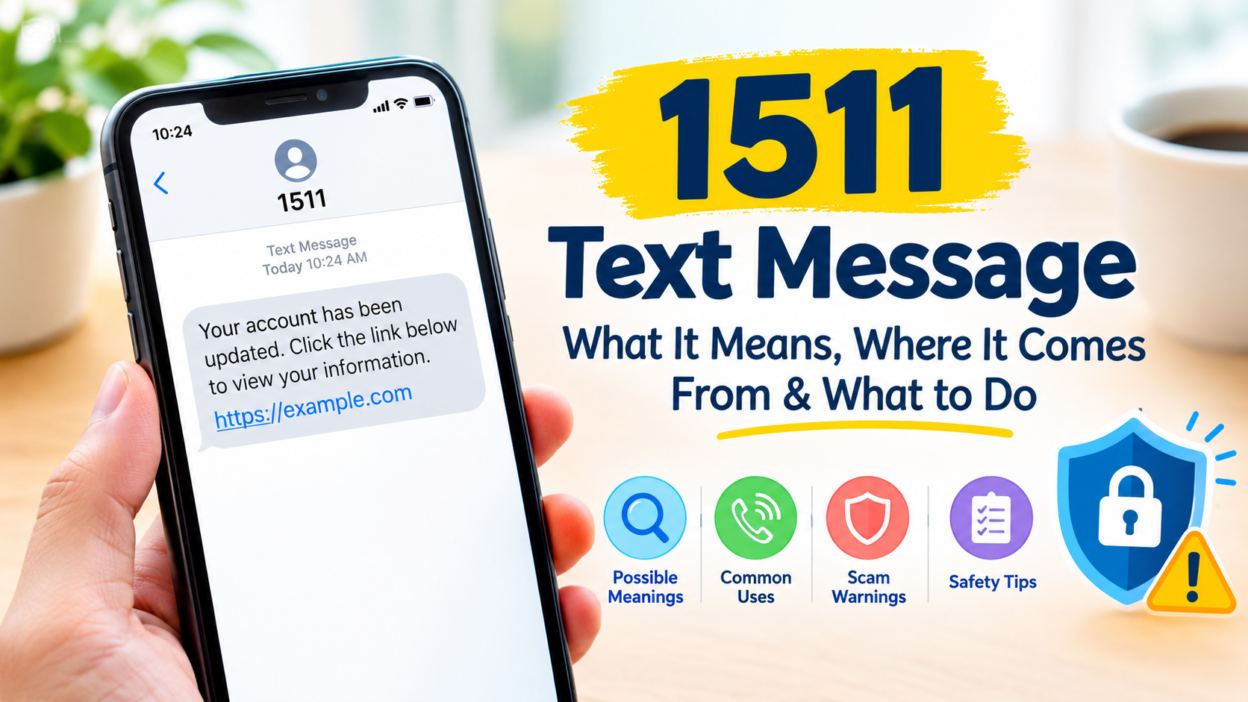
Seeing 1511 Text Message on your phone can be confusing, especially when the message arrives without a clear explanation. You might wonder whether 1511 is a company code, a verification service, a billing alert, or simply an automated notification.
The meaning depends heavily on the message content, sender information, and service connected to it. A short code or number alone doesn’t provide enough evidence to identify the sender with certainty. Therefore, it’s better to examine the actual message before replying, clicking a link, or sharing personal information.
This guide explains what 1511 can represent, how short messaging numbers work, how to assess an unexpected message, and what you should do if the text seems suspicious.
📱 What Is a 1511 Text Message?
A 1511 text message refers to an SMS associated with the number or short code 1511. However, the number itself doesn’t establish one universal meaning.
Businesses, service providers, organizations, and automated systems can use short numbers for text communication. Depending on the country and mobile network, the same-looking number can have different uses.
For example, a message might relate to:
- An automated notification
- A service update
- A verification request
- An account-related alert
- A promotional message
- A customer-service interaction
- A reminder or subscription
- A message sent through an SMS platform
Consequently, the safest approach is to read the complete message rather than assuming what 1511 represents.
🔎 Why Did You Receive a Message From 1511?
There are several possible reasons for receiving an SMS from a short number. The most useful clue is usually the content of the message.
If the text mentions an account, transaction, appointment, delivery, login attempt, or verification code, it may relate to a service you recently used.
On the other hand, an unexpected promotional message could have a completely different origin. Sometimes automated systems send notifications after a user interacts with a website, application, business, or subscription service.
Consider these situations:
Message contentPossible contextVerification codeLogin or account verificationPayment notificationTransaction or billing systemDelivery updateOrder or shipping servicePromotional offerMarketing communicationAccount warningSecurity or account activitySubscription noticeService or recurring communication
These examples describe possible contexts, not guaranteed meanings. The wording inside the SMS matters more than the number alone.
💬 Does 1511 Have One Official Meaning?
Not necessarily.
People often search for a short number because they expect it to have one fixed definition. In reality, SMS short codes can be associated with different services depending on the telecommunications environment.
Furthermore, mobile numbering systems differ between countries and carriers. A number that identifies one service in one region may not serve the same purpose elsewhere.
That’s why websites claiming that every message from 1511 has one specific meaning should be treated cautiously unless they provide reliable evidence.
The best evidence comes from:
- The full SMS text.
- The sender details shown by your phone.
- The company or service mentioned in the message.
- Any action you recently took.
- Official information from the relevant provider.
🧾 How to Understand the Message You Received
Before taking action, examine the SMS carefully.
First, identify what the message is asking you to do. Does it tell you to verify an account, confirm a payment, open a website, call a number, or simply provide information?
Next, check whether the message matches something you actually did.
For instance, suppose you recently requested a login code from an online service. A verification message arriving shortly afterward makes sense. Conversely, receiving a payment alert for a purchase you never made deserves additional investigation.
Also, pay attention to unusual wording. Poor grammar, urgent threats, suspicious links, and requests for sensitive information can indicate a fraudulent message.
Questions to ask yourself
- Did I recently use the service mentioned?
- Did I request a verification code?
- Does the message mention my actual account?
- Is the website address legitimate?
- Does the message ask for confidential information?
- Was I expecting this notification?
These simple checks can prevent unnecessary worry and reduce the chance of falling for a scam.
⚠️ Is a 1511 Text Message a Scam?
The number alone doesn’t prove that a message is legitimate or fraudulent.
Scammers can use many communication methods, including SMS. They may imitate banks, delivery companies, online platforms, government services, or other recognizable organizations.
A suspicious message often tries to create urgency. For example, it might claim that your account will be closed immediately unless you click a link.
Be especially careful if the SMS asks for:
- Passwords
- Banking information
- Credit card details
- Security codes
- Personal identification information
- Remote access to your device
- Cryptocurrency payments
Don’t provide sensitive information simply because an SMS appears to come from a short number.
Instead, visit the organization’s official website or use its official application to check your account.
🔐 What Should You Do If the Message Looks Suspicious?
Don’t click links immediately.
Take a moment to inspect the message. If it claims to come from a company you use, contact that company through a trusted channel rather than using contact information included in the suspicious SMS.
You can also:
- Take a screenshot for your records.
- Avoid replying to questionable messages.
- Don’t share verification codes.
- Don’t open unexpected links.
- Block the sender if appropriate.
- Report suspicious activity through your carrier or relevant authority.
- Check your account directly through the official service.
If you already clicked a suspicious link, don’t panic. Close the page and avoid entering additional information. If you submitted credentials, change them through the legitimate website and consider enabling stronger account security.
🌎 Why Location and Mobile Carrier Matter
One important detail often overlooked in discussions about messaging numbers is geography.
SMS numbering systems aren’t identical worldwide. Mobile operators can assign short codes differently, and some numbers may have specific regional or commercial purposes.
Therefore, someone searching for “1511 text message” in the United States may not be dealing with the same service as someone searching from another country.
Your carrier can also influence how the sender appears on your phone.
For that reason, identifying the country, carrier, and exact SMS wording can make a major difference when investigating an unfamiliar message.
👥 How People Encounter Short Messaging Numbers
Short messaging numbers appear in many everyday digital interactions.
A student might receive an automated verification message after signing into an educational platform. Similarly, a customer could receive an order notification after buying something online.
Employees may encounter automated SMS notifications related to workplace systems. Meanwhile, gamers can receive authentication codes when signing into gaming accounts.
Social media platforms and other online services may also use automated messaging systems for security alerts or account verification.
These examples demonstrate why the number alone rarely tells the complete story.
🏢 1511 Text Messages in Business Communication
Businesses commonly use automated messaging to communicate with customers.
An organization might send appointment reminders, order updates, verification codes, service announcements, or promotional messages through an automated system.
However, legitimate businesses generally don’t need your password or one-time security code through an unexpected reply.
If a business-related message seems genuine but you aren’t sure, verify it independently.
For example, instead of tapping a link in the SMS, open the company’s official website manually. Then sign into your account and check for the same notification.
That small extra step provides a much safer way to confirm the message.
🚫 When Should You Not Reply to 1511?
Avoid replying when the message:
- Comes unexpectedly and asks for money.
- Requests a password or security code.
- Uses threatening language.
- Contains a suspicious shortened link.
- Claims you’ve won something you never entered.
- Asks you to move the conversation elsewhere.
- Requests sensitive financial information.
- Creates extreme urgency.
A reply can sometimes confirm that your number is active. More importantly, responding may encourage further interaction with a suspicious sender.
If the message appears legitimate but you’re unsure, verify the organization independently first.
🧠 Common Mistakes People Make
One common mistake is assuming that a number has one universal meaning.
Another is searching only for the number while ignoring the actual SMS content. The message itself often provides much stronger clues.
People also sometimes click links because the message mentions a familiar company. Unfortunately, scammers can imitate legitimate brands.
A further mistake involves sharing verification codes. A one-time code should generally be treated as private information. If someone unexpectedly asks you to send one, stop and verify the request.
Finally, don’t assume that a message is safe simply because it doesn’t contain obvious spelling errors. Modern scam messages can look surprisingly convincing.
🛡️ How to Verify an Unexpected SMS Safely
Verification doesn’t have to be complicated.
Start by identifying the organization named in the message. Then find its official website or open its legitimate mobile application independently.
Check whether your account contains the same alert.
If the message concerns a bank or payment service, use the contact number printed on your card or listed inside the official application. Don’t rely on a phone number supplied by an unexpected text.
Similarly, if the message concerns a delivery, check the order directly through the retailer’s or carrier’s official platform.
This approach separates the claim made by the SMS from independent evidence that the claim is real.
📊 1511 vs. Other SMS Short Codes
It’s useful to understand why short codes can cause confusion.
A standard phone number often contains enough digits to identify a particular subscriber or business. A short code is much shorter and is commonly used by automated messaging systems.
However, short-code systems vary by country and carrier.
TypeTypical purposeStandard phone numberPerson-to-person or business calls and textsShort codeAutomated SMS and service communicationVerification codeAccount or identity confirmationMarketing senderPromotions and customer outreachTransaction alertPayment or account notification
The important distinction is that a short code identifies a messaging route, not necessarily the exact reason you received the message.
💡 Practical Tips for Handling Unknown Text Messages
A few habits can make SMS communication much safer.
Don’t react immediately. Urgency is often used to influence decisions.
Read the entire message. Important context may appear near the end.
Check recent activity. Your own actions can explain legitimate notifications.
Verify independently. Use an official website, application, or trusted customer-service channel.
Protect security codes. Don’t forward them to another person unless you’re certain why they’re needed.
Keep your phone updated. Security updates can reduce exposure to known threats.
Report suspicious messages. Your carrier or relevant service may provide reporting options.
These habits are useful whether the sender is 1511 or another unfamiliar number.
❓ Frequently Asked Questions About 1511 Text Message
What does 1511 mean in a text message?
The number doesn’t necessarily have one universal meaning. Its purpose depends on the country, carrier, service, and content of the SMS.
Is 1511 a legitimate texting number?
A short number can be used by legitimate automated services, but the number itself doesn’t prove legitimacy. Always examine the message and verify unexpected requests independently.
Should I reply to a message from 1511?
If you don’t recognize the sender or the message requests sensitive information, don’t reply immediately. Verify the organization through an official channel first.
Can a 1511 message be a verification code?
It’s possible for automated messaging systems to deliver verification codes through short numbers. However, the message itself should identify what the code relates to.
What if the message contains a link?
Treat unexpected links carefully. Instead of opening the link, visit the claimed organization’s official website directly and check your account there.
Why did I receive the message when I didn’t request anything?
Automated messages can sometimes result from account activity, subscriptions, service notifications, or a mistyped phone number. If the content doesn’t match anything you did, verify the sender before taking action.
What should I do if I already responded?
If you shared no sensitive information, stop further communication and monitor the situation. If you provided passwords, financial details, or security codes, secure the affected account through its official service as soon as possible.
Can the same short code mean something different in another country?
Yes. Telecommunications systems and short-code assignments can vary by region. Your country and mobile carrier are important when identifying an unfamiliar SMS.
🔚 Final Thoughts
A 1511 text message shouldn’t be interpreted from the number alone. The sender’s identity, message wording, country, carrier, and your recent online activity all provide useful context. Therefore, don’t assume that every message from 1511 represents the same service or purpose. If an SMS asks for sensitive information or pushes you toward an unfamiliar link, pause and verify it independently. A few extra seconds of caution can protect your accounts, money, and personal information.